Australia: What We Learned
- 1414
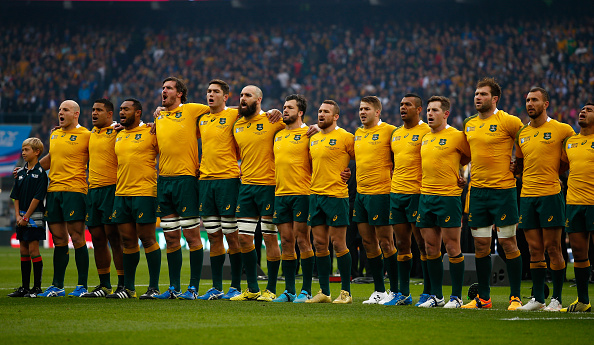
Attitude is important. Attitude can be decisive.
They may deny it vehemently, but one doesn’t need to be a mind-reader to determine that Australia approached their quarter-final against Scotland over-confident and complacent. It was understandable perhaps after their impressive pool games and Scotland’s relative struggle through their pool, but puzzling too, since a big part of their wins over England and Wales had come from admirable attitude.
Their lack of urgency – in contrast to Scotland’s burning desire – contrived to rattle them and cost them momentum, composure, rhythm, and points. Their decision-making became haphazard, timing went astray, defence looked lethargic at times, and in the end they had to settle for a 35-34 escape against a Scotland team playing out of their skins.
An objective judge (there were few indeed at Twickenham,
certainly not on the stands or in the commentary box) may assess the Wallabies
as deserving the win because they scored five tries to Scotland’s three, but Greig
Laidlaw’s impressively accurate boot almost negated that try superiority.
What we know now:
* Bernard Foley has been a star for
Australia through the pool games but on Sunday played his worst Test ever, with
poor decision-making, wayward timing, including conceding a try from a charged-down
kick, and a horrible goal-kicking display – until top-class BMT saw him goal
the winning penalty under intense pressure.
* No-one would have been happier to
see Foley kick the winning points than James Slipper, whose shocker of a long
pass gave Mark Bennett a gift try that looked set to be the winning points for
Scotland.
* Australia’s scrum was under real
pressure for the first time at the tournament – though Mario Ledesma and his
props may question the accuracy of a few of the officials’ calls against them.
* The Wallabies forwards need a step
up in quality of performance if they are to beat Argentina and if they do, to
win the final. Improving physical intensity would be a good start.
* Adam Ashley-Cooper and Drew
Mitchell were the Wallabies sharpest backs in a mostly mediocre team
performance, with Kurtley Beale good too and Tevita Kuridrani a physical
presence. Matt Giteau was a strange choice for TV’s ‘man of the match’, a
surprise not least of all for Giteau himself, since he had a quiet game.
* Among the forwards, would anyone
other than Ben McCalman be happy with his game? Even Michael Hooper performed
below his own superbly high standards.
* Australia’s chances of winning the
World Cup are heavily dependent on David Pocock recovering from his calf
injury.