New Zealand vs Australia: RWC Final Preview
- 1504
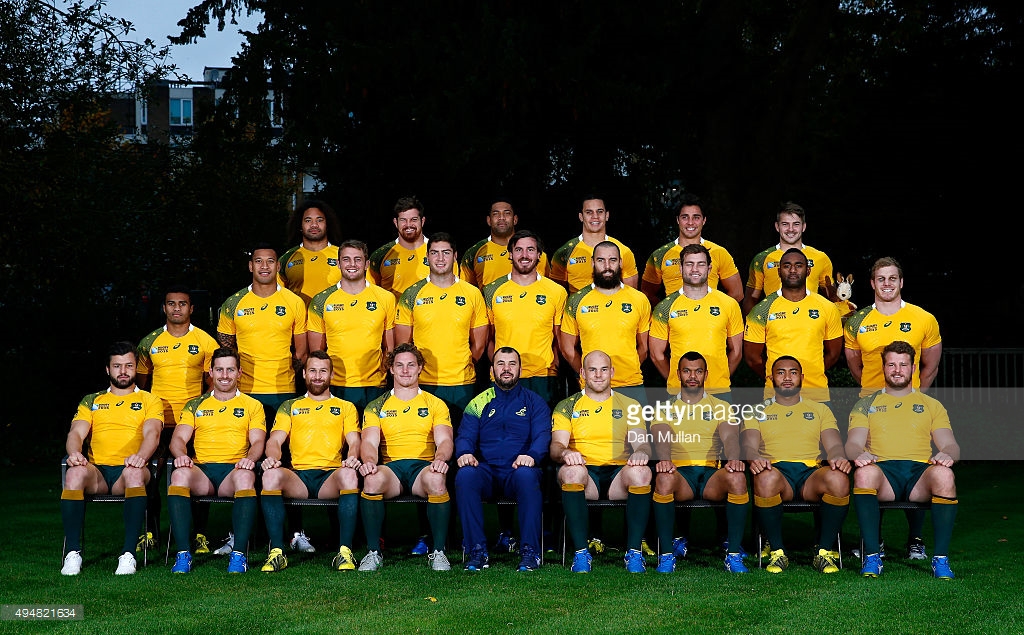
This is it. After years of preparation culminating in an intense six weeks of World Cup matches, we have the two top teams on planet Earth playing in Rugby World Cup Final 2015, at what many regard as the premier Rugby Union stadium on the planet.
A few of the 46 players are already all-time rugby legends and a few of the others are headed in that direction. The collective skills’ level of these players may be more prolific than ever before seen together on a rugby field. The world’s most accurate, most consistent, best communicating referee has the whistle. Tickets to Twickenham are expensive but millions around the globe will have TV access, and though the contest is between the two Antipodean neighbours, global interest is huge.
We have two teams with individuals and combinations capable of beating defenders through skill, teams able to vary attacking play from channel one to midfield to out wide, able to make contact and win collisions as well as to penetrate defence by running into space, supporting, passing, and off-loading.
Defence on either side will be organised, committed, and tight, with defensive linespeed and alignment discipline similar assets.
Both teams can adhere to planned structure, but players have licence to play what they see in front of them and attack with creative adventure. Flair is encouraged.
Both teams have earned the right to confidence, with Australia having scored impressive wins over England, Wales, and Argentina on their way to the final, and New Zealand having beaten Argentina, smashed France, and overcome the Springbok onslaught in a semi-final clash with all the intensity of a final.
Coaches Michael Cheika and Steve Hansen are two of the globe’s great rugby intellectuals and coaching practitioners, superbly adept at getting the best out of their teams.
Breakdown will be crucial, with both teams technically proficient and physically imposing, and in Richie McCaw, David Pocock, and Michael Hooper, quite possibly rugby’s three best-ever openside breakdown specialists.
Both packs’ scrummaging has varied between convincing and ordinary, with penalty infringement issues for both teams’ looseheads of late. Stealing lineout ball may be decisive, as it proved for the All Blacks against the Springboks last week.
Both teams are astute at decision-making, with mostly judicious options. It’s execution of options that may win or lose the game. Tactical kicking is an area where the All Blacks may have an edge, with Aaron Smith, Dan Carter, and Ben Smith often more accurate than Will Genia, Bernard Foley, and Israel Folau. Accurate execution of kicking for position on the day may determine the result.
A concern for both teams will be the number of goalable penalties conceded. Their multiple attacking skills notwithstanding, it is discipline in avoiding infringements within 50 metres of their posts that in the end could win or lose the Webb Ellis Cup.
Key players:
For New Zealand, two players who appear headed for knighthoods in their mid-thirties,
Richie McCaw and Dan Carter, plus Aaron Smith and Ben Smith among their backs
and Sam Whitelock (brilliant against South Africa) and Kieran Read up front.
For Australia, Matt Giteau as an influential catalyst directing those around
him, Will Genia, playing his best rugby in years, Israel Folua, if he can find
his elusive magic, and up front the extraordinary duo, Pocock and Hooper.
The big match-ups:
At breakdown, an all-time classic clash – Pocock and Hooper vs McCaw. As
scrummagers, Owen Franks vs Scott Sio. The goal-kicking of Foley and Carter. At
12, two streetsmart Test centurions, Giteau and Ma’a Nonu.