World Rugby aiming for consistency in high tackle laws with new framework
- 2831
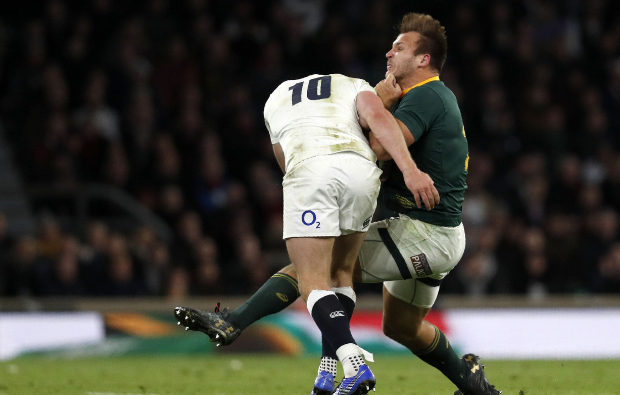
World Rugby has released a new framework for refereeing decisions concerning dangerous high tackles and shoulder charges.
The new framework comes into immediate effect at Test level and is been implemented with the intention of ensuring more consistent and accurate decisions around whether high tackles should be punished with a penalty, yellow card or red card.
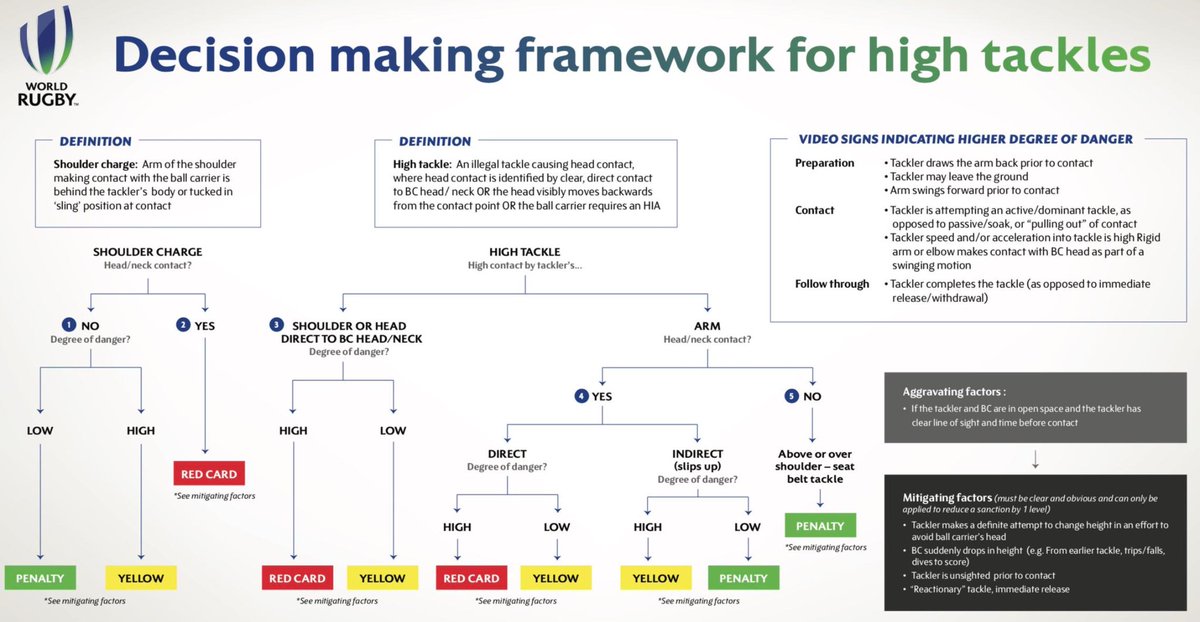
Image via World Rugby
World Rugby has stated that the framework is a systematic tool that guides decision making and provides the referees with a logical, step by step approach to the problem.
World Rugby has also provided a clip on the new framework, which includes examples of shoulder charges and high tackles.
The four-step process to use the framework is as follows:
Is the tackle a shoulder charge or high tackle?
Shoulder charge
Arm of the shoulder making contact with the ball carrier is behind the tackler’s body or tucked in ‘sling’ position at contact
High tackle
An illegal tackle causing head contact, where head contact is identified by clear, direct contact to BC head/ neck OR the head visibly moves backwards from the contact point OR the ball carrier requires an HIA
Note: the head’s first movement is back in a head-contact tackle or head-contact shoulder charge, and forward in a ‘body-contact’ tackle or ‘body-contact’ shoulder charge
High Profile examples:
Shoulder charge:
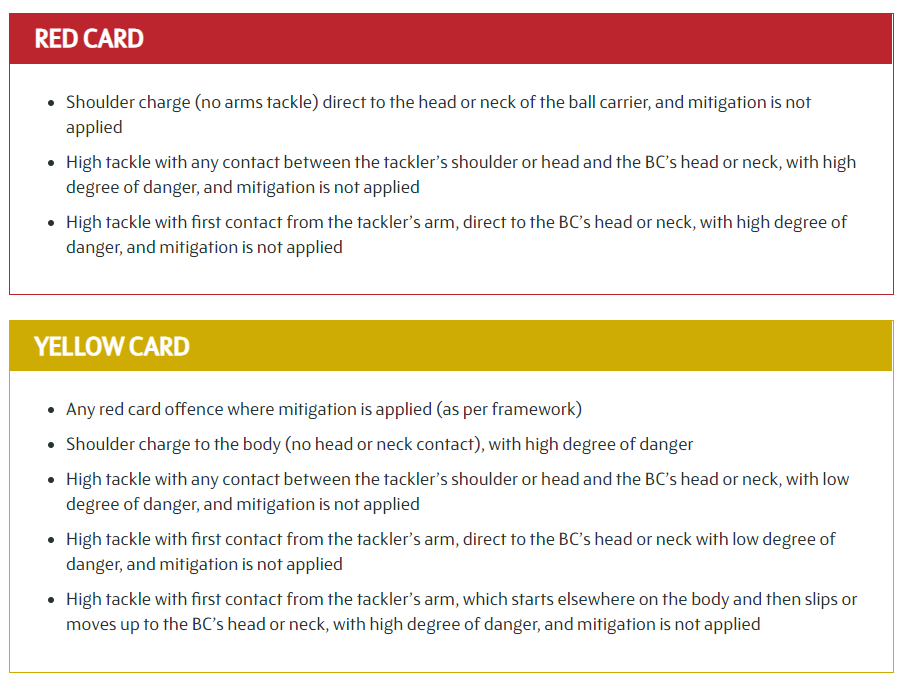
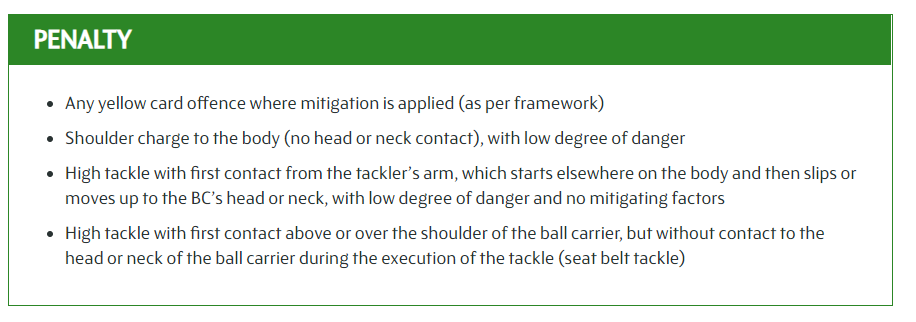
World Rugby also included the following examples of when each sanction should apply:
See all the mitigating factors and the entire framework from World Rugby HERE